
Key Takeaways
- An estate sale house is a house that is sold by an estate, rather than by a regular homeowner. It is usually handled by an executor, administrator, or family member after a death, downsizing, or assisted living move.
- Many estate sale companies specialize in selling household items and have a minimum requirement, around $5000 to $10000, before they deal with the sale.
- Expect additional paperwork and possibly slower time schedules. Multiple heirs, probate steps, or court approvals can add time compared to a regular transaction.
- Many estate homes are sold as is, so due diligence is more important. Inspections, title checks, and a realistic repair budget are so important because the seller may not be aware of the full history of the home.
- Dated systems, repairs needed and clutter have the potential to lower the value, and a clean, safe and empty home usually attracts stronger offers.
- Strong financing, very clear offer terms and professionals with an understanding of older homes in Long Island can help you buy faster and with fewer surprises.
Introduction
An estate sale house is a house that is on sale as part of someone’s estate, often after a death, a move to assisted living, or another significant life change. The sale usually is handled by an executor, administrator, or family member who has the responsibility of settling affairs and converting assets to cash for the purpose of paying debts and distributing inheritances.
Many estate sale companies specialize in selling the contents of a home, such as furniture, collectibles, and household goods, and they often require a minimum estimated total value, which is commonly around $5,000–$10,000, in order for them to agree to handle the sale. The sale of the house may occur independently, but the two are often connected because clearing out the home makes it easier to list and sell.
Understanding Estate Sales in Real Estate
In the case of real estate, the use of “estate sale” is often an indicator that the property is being sold by an estate and not by a typical owner occupant. That can mean an extra bit of paperwork, multiple decision makers, and a sale that is shaped by legal and family responsibility, not simply personal preference.
It can also often mean that the home is selling in its current condition. Some of the estate homes are beautifully maintained, while others need repairs, updates or a complete renovation. The most important thing to consider is that the seller is not necessarily someone who recently lived in such a place, and therefore, may not know every detail about the property.
Estate Sale House Versus Regular Home Sale: Key Differences
A regular home sale is typically motivated by the timeline, the emotions, and the next move of the homeowner. An estate sale is motivated by the needs of the estate, deadlines and legal process. Here is a side-by-side comparison:
| Feature | Estate Sale House | Regular Home Sale |
| Primary seller | Executor/administrator for the estate | Owner(s) on title |
| Legal process | Often tied to probate + court deadlines | Normal escrow/title closing |
| Condition | Usually sold as-is | Often cleaned, repaired, updated |
| Disclosures | Often limited (executor may not know history) | Full “known issues” disclosures |
| Pricing | Priced to move and settle the estate | Priced to maximize proceeds |
| Timeline | Can drag out if probate/heirs delay | Usually 30–45 days after contract |
| Taxes | Often gets a step-up in basis for heirs | Standard capital gains rules |
| Negotiation | More parties, more approvals | Usually direct buyer–seller |
How Estate Sales Work: A Step by Step Guide
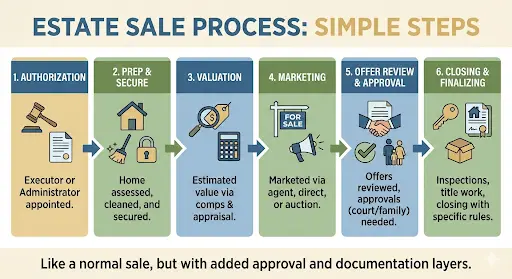
The process can feel unfamiliar at first, but it follows a clear path once you know what to expect. Think of it as a normal sale with extra layers of approval and documentation.
- Somebody is authorised to sell e.g. executor or administrator.
- The home and its contents are evaluated, cleaned out, and secured.
- Value is estimated on the basis of local comparable sales and sometimes appraisal.
- The way of sale is by agent, direct sales route, or auction route.
- Offers are considered sometimes with the need for court or family approval.
- Inspections, title work and closing occur, often with strict rules for personal property left behind.
Why People Sell Homes Through Estate Sales
Estate situations are emotional and practical at the same time. Families could be living far away, the house could be old, or there could be pressure to make ends meet in the form of taxes, insurance, utilities, or outstanding debts.
At times, the objective is a fast closing and stress-free process, while other times the goal is maximizing value, particularly the case if there are multiple heirs and everybody wants a fair outcome. The best method is dependent on the condition of the home, the local market and how soon the estate home sale needs to close.
Estate Sale House Process Explained
On the seller side, the authority and the paperwork for an estate sale house generally begins. If the owner died, the person’s property may go through probate, depending on how the property was titled, and what decision was made. Once the right person was legally allowed to sell, they can hire professionals to help.
This is where many estates make a smart move, when they separate the “stuff” from the “structure.” An estate sale company can take care of contents, while a real estate agent or direct buyer can take care of the home.When done in the correct order, the property sees improved marketability, feels safer to tour, and gets better offers.
Benefits of Buying an Estate Sale Home
Estate sale homes are an opportunity that can be a great deal, especially for the buyer that is patient, prepared, and realistic about conditions. You may find homes with large lots, with older craftsmanship, or great neighborhoods that do not have many listings.
You may often have less emotional back and forth than if you were dealing with a traditional seller. Many estates are concerned with a clean, reliable closing. If you can offer that, the offer can stand out even if it is not the highest number on paper.
Risks and Considerations When Buying an Estate Sale House
There is a difference in the risk profile for estate purchases. The biggest risk is unknown. The person selling may not have been living in the home recently so may not be aware of past leaks, faulty wiring, or even old repairs.
Another risk is delay. If there are multiple heirs who must agree, or if the court needs to approve the sale, things can go slower than expected. You also have to look out for title problems such as old liens, unpaid property taxes, or unclear ownership history. This is why a good title search and a good inspection is not an option.
How to Prepare an Estate Sale House for Sale
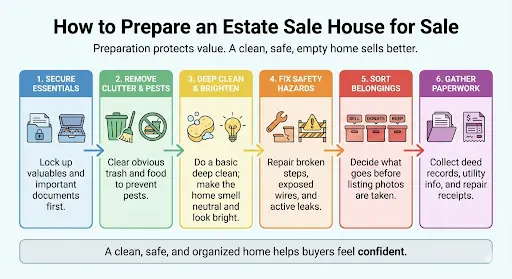
Preparation is where value is either protected or quietly lost. A clean and safe empty home almost always sells better than a cluttered home, even if the buyer is planning to renovate. Follow the steps below to make buyers feel comfortable when they walk in:
- Secure valuables and important documents first.
- Remove obvious trash and food to prevent pests.
- Do a basic deep clean so the home smells neutral and looks brighter.
- Fix safety issues like broken steps, exposed wires, or active leaks.
- Decide what will be sold, donated, or kept before listing photos.
- Gather paperwork like deed records, utility info, and any repair receipts.
Estate Sale House Pricing: How It’s Determined
The pricing is typically based on similar sales in the same neighborhood or neighborhood adjusted for condition. If the home is an older one, requires a new roof, or has old systems, buyers will deduct those costs from what they are willing to pay.
A cleanout also influences price. A home that is full of things can appear smaller and more difficult to deal with, and buyers make assumptions that problems exist where none do. When an estate prices a home, they are balancing fair market value with the reality of repairs, time, and the buyer pool.
Estate Sale Auctions Versus Traditional Sales
There are two common routes: list the home traditionally, or sell through a sort of auction process. Auctions can move quickly and can kick a sense of urgency, but can be intense to buyers as well and can come with strict terms.
Traditional listings provide for normal showings, inspections and negotiations, and typically attract retail buyers who are seeking a mortgage. Auctions may attract investors and cash buyers who are happy with as-is condition. The right choice depends on the timeline of the estate as well as the condition of the home.
How to Find Estate Sale Houses in Long Island
Long Island has a steady flow of estate related listings, especially in neighborhoods with long time homeowners. Finding them is about knowing where they show up and how they are described. Here are practical places to look, and how to look smarter.
- MLS listings that mention estate, executor, administrator, or as is.
- Local agents who focus on probate and inherited property sales.
- Public records and probate notices, if you know how to search them.
- Auction platforms that include Nassau and Suffolk County properties.
- Direct outreach in neighborhoods where you want to buy, done respectfully.
Common Mistakes Buyers Make With Estate Sale Homes
The biggest mistakes are usually caused by rushing or assuming. Estate homes can be gems, but they punish sloppy planning. Read these as a quick reality check before you fall in love with the photos.
- Skipping inspections because the home looks “fine” at first glance.
- Underestimating renovation costs, especially plumbing, electric, and mold.
- Ignoring title details like liens, taxes, or unclear authority to sell.
- Assuming the estate will fix issues the way a normal seller might.
- Not planning for delays when multiple approvals are needed.
Tips for First Time Buyers of Estate Sale Homes
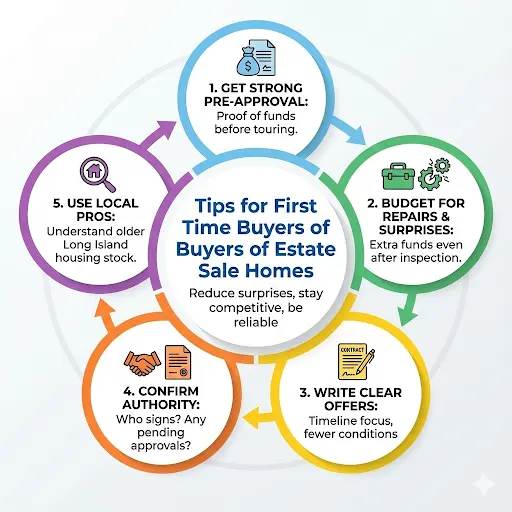
If this is your first purchase of an estate, your goal is simple: reduce surprises. Often in estate situations a calm organized buyer wins because the seller is looking for reliability. Use the following tips to save yourself while staying competitive:
- Get a strong pre-approval or proof of funds before touring
- Budget extra for repairs and surprises, even after the inspection
- Write offers with clear timelines and fewer unnecessary conditions
- Ask who has the authority to sign/make any approvals pending
- Use professionals who understand older Long Island housing stock
Estate Sale House Trends and Market Insights
More families are dealing with inherited homes and more buyers are looking for homes that they can personalize. That is a combination that makes the estate sale homes popular, even as the market changes. In competitive areas of Long Island, a well located estate home may attract several offers, particularly if the estate home is priced to reflect its condition.
At the same time, buyers are more cautious than they used to be. Inspection focused offers, insurance requirements, and renovation costs are more important now. The estates that do basic cleanout, prices realistically, and provide easy access for inspections tend to sell faster and with less obstacles.
Conclusion
An estate sale house is not automatically a bargain, and it is not necessarily a problem. It is simply a home being sold under set circumstantial procedures on estate, and it does make a difference in how choices are taken, how the home is prepared, and how the deal advances toward closing.
If you need help locating estate sale homes in Long Island and are looking for proper ways to make a strong offer, Kaya Homes can help you from the moment you start your search to the time of closing with clear advice and local expertise. Reach out to our team and talk to us about what you can afford, where you want to live, and the safest way to buy the right home.
FAQs
Is an estate sale house always sold as is?
Maybe, but not always. Many estates like to sell as-is since they do not wish to have the property repaired, but some may negotiate credits.
Can I use a mortgage to buy an estate sale house?
Yes, if the home meets lender standards. If there is the need for major repairs, some buyers opt for renovation loans or choose cash offers to avoid appraisal problems.
Why do estate sales sometimes take longer to close?
Extra approvals can slow things down. Multiple heirs, timing of probate, or court steps have the potential to add days and weeks compared to a regular sale.