
Key Takeaways
- Know exactly why you are buying the land as it is your purpose which determines the right size and location, including budget.
- Never depend on photos only, always walk the land and observe slope, flow of water, soil, risk of floods, and feel of the surroundings.
- Study the zoning and local rules close enough so that your dream home, farm, or project will actually be allowed on the land you already own.
- Make sure to verify title, taxes, easements and any legal claims through public records, a real estate attorney, and a trusted title company.
- Order a proper land survey so that you are certain about the true boundaries, encroachments and any sensitive areas before you build.
- Ask clear questions referring to utilities, road access, danger of environmental contamination, and future development so that there are no surprises after you make your purchase.
Introduction
Buying land is very different from buying a completed home. When you purchase a house, you can see the layout, inspect the condition, and understand exactly what you are getting. When you purchase land, you are buying possibility. You are investing in a future structure, a future lifestyle, or a future return on investment. That makes land exciting, but it also requires careful thought and informed decision-making.
As real estate professionals, our role is not to provide legal advice, engineering assessments, or environmental certifications. We also do not label one area as “good” or “bad.” Every buyer’s needs, goals, and preferences are different. What works perfectly for one client may not suit another. Our responsibility is to help you understand the market, guide you through the buying process, and connect you with the appropriate professionals when needed.
If you are considering purchasing land in Long Island, this guide outlines what you should understand from a real estate perspective before moving forward. The goal is to help you make a confident, well-informed decision while working within the proper professional boundaries.
Clarify Your Purpose Before You Start Searching
Before reviewing listings or visiting properties, the most important step is defining your purpose. Land can serve many different goals. Some buyers plan to build a primary residence. Others are interested in long-term investment, future development, or holding property for appreciation. Some buyers intend to build immediately, while others may wait several years.
Your intended use directly impacts the type of land you should consider. Lot size, location, access to utilities, surrounding development, and budget will all vary depending on your plans. As real estate professionals, we begin by understanding your objectives so we can help you identify properties that align with your goals.
Being clear about your timeline is equally important. If you plan to build soon, you may prioritize parcels that already have infrastructure nearby. If your purchase is purely for investment, you may focus on areas with ongoing development activity or growth trends.
Understanding Location Without Generalizations
Location remains one of the most important factors in any real estate transaction. However, it is important to approach this topic professionally and objectively. Rather than labeling areas as “better” or “worse,” we focus on sharing factual information about the local market, development patterns, and property characteristics.
In Long Island, different towns and neighborhoods offer varying property sizes, zoning classifications, access to transportation, and proximity to amenities. Some buyers prioritize convenience to highways or commuter rail stations. Others prefer larger lots or proximity to water. Market data, recent sales trends, and infrastructure development can all influence property value over time.
As real estate professionals, we provide comparative market information and help you evaluate how a specific property fits your personal criteria. The right location depends entirely on your lifestyle, budget, and long-term plans.
Market Availability and Land Inventory in Long Island
Vacant land inventory in Long Island is generally more limited than traditional residential listings. Many available parcels are privately owned and may not always appear on large public listing platforms. Some land is offered through local networks, specialty platforms, or estate sales.
Understanding the supply of buildable lots in a given area helps set realistic expectations regarding pricing and negotiation. Land pricing can vary widely based on size, accessibility, and surrounding development. Recent comparable land sales are often fewer than residential comps, which means accurate pricing analysis requires careful local evaluation.
A real estate professional can provide insight into current land inventory, recent transaction activity, and how long similar parcels have remained on the market.
Utilities and Infrastructure Considerations
From a real estate standpoint, access to utilities is one of the most important practical factors when evaluating land. While we do not provide engineering advice, we encourage buyers to confirm whether water, electricity, sewer, and gas lines are available at or near the property.
In some areas of Long Island, properties rely on septic systems rather than municipal sewer. In other locations, public water may be available, while certain parcels may require well installation. These factors influence development costs and timelines.
As your real estate team, we help you ask the right questions and guide you toward verifying infrastructure details through appropriate service providers or local authorities.
Zoning Awareness Without Legal Interpretation
Zoning regulations determine how land may be used. While we are not attorneys and do not provide legal interpretations of zoning codes, we help buyers understand the general classification of a property and encourage confirmation with the appropriate municipal department.
For example, a parcel may be zoned residential, agricultural, or commercial. Within those categories, there may be restrictions on lot coverage, building size, setbacks, and accessory structures. Buyers planning to build should always verify that their intended use aligns with local regulations.
Our role is to highlight zoning considerations early in the process and recommend that buyers consult planning departments or qualified professionals for specific project approvals.
Evaluating the Property in Person
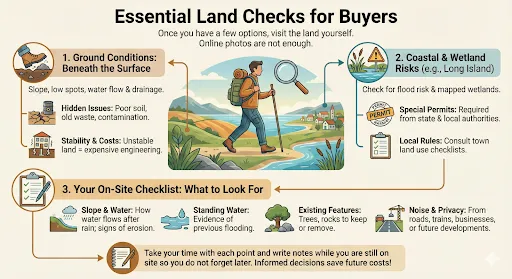
Online listings provide helpful photos and aerial views, but visiting the property in person is essential. Walking the land allows you to understand its layout, slope, surrounding structures, and overall feel.
Pay attention to elevation changes, tree coverage, neighboring properties, and road access. Notice traffic patterns and general surroundings at different times of day. While we cannot provide environmental certifications or engineering evaluations, we encourage thorough due diligence.
If needed, we can connect you with surveyors, inspectors, or other professionals who specialize in evaluating land conditions.
Understanding Surveys and Boundaries
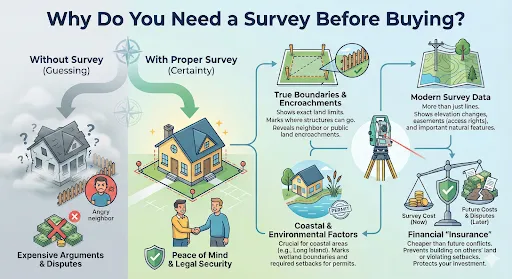
Property boundaries are extremely important in land transactions. As real estate professionals, we strongly recommend obtaining or reviewing a current survey when available. A survey helps confirm the size and limits of the parcel and identifies easements or encroachments.
Without a survey, it can be difficult to determine exact property lines. While we do not conduct surveys ourselves, we can help coordinate with licensed surveyors and ensure that boundary documentation is properly reviewed before closing.
Title and Ownership Verification
Clear ownership is critical in any real estate transaction. Title searches are typically conducted through a title company or real estate attorney to confirm that the seller has the legal right to transfer ownership and that no outstanding liens or claims exist.
Although title review falls outside the scope of direct real estate licensing services, we coordinate closely with title professionals to ensure the process moves smoothly. Protecting your ownership rights is an essential part of the transaction.
Financing Vacant Land
Financing land can differ from financing a home. Some lenders have stricter requirements for vacant land loans, including higher down payments. Buyers planning to build may explore construction-to-permanent loan options.
We encourage buyers to speak directly with lenders who are experienced in land financing. Our role is to connect you with reputable local professionals who understand the Long Island market.
Long-Term Value and Market Trends
When purchasing land as an investment, understanding long-term trends is important. Rather than predicting appreciation, we rely on historical sales data, local development patterns, and infrastructure projects to provide context.
Areas experiencing new construction, road improvements, or population growth may show increased activity over time. However, every market carries risk, and no appreciation can be guaranteed. We focus on helping buyers analyze available data and make informed decisions aligned with their risk tolerance.
Questions to Consider Before Making an Offer
Before submitting an offer on land, consider confirming the property’s zoning classification, utility access, property tax estimates, and any known restrictions. Ask about previous listing history and how long the property has been on the market. Understanding these factors helps shape negotiation strategy.
- What is the exact zoning of this land, and what does that allow me to build?
- Are there any current or past planning applications on this land or nearby parcels?
- Does the land sit in a flood zone, wetland area, or any other special environmental area?
- Which utilities are already available at the site, and which will need to be brought in?
- Is there legal access to a public road, and are there any shared driveway agreements?
- Are there any easements or rights of way that allow others to use parts of this land?
- Have there been any reports of contamination or previous industrial use on this site?
- What are the annual property taxes, and are there any special local assessments?
- Is there an existing survey, and can I review a copy before making an offer?
- Are there any covenants, design rules, or community restrictions that limit my plans?
Our Role as Real Estate Professionals
It is important to clarify the boundaries of what a real estate professional provides. We guide you through the buying and selling process, analyze market data, coordinate showings, negotiate terms, and help manage timelines. We do not replace attorneys, surveyors, engineers, or municipal officials.
Our responsibility is to ensure you are informed, connected to the right experts, and supported from initial inquiry through closing.
Conclusion
Buying land in Long Island can be an exciting opportunity, whether you plan to build a home, hold property for investment, or develop in the future. Unlike purchasing a finished house, land requires careful planning, thorough research, and collaboration with qualified professionals.
By clarifying your goals, reviewing market data, understanding infrastructure availability, and coordinating with appropriate experts, you can approach a land purchase with confidence. As real estate professionals, our role is to guide you through the process, provide reliable market insight, and help you navigate each stage smoothly and responsibly.
If you are exploring land opportunities in Long Island, our team at Kaya Homes is here to help you evaluate available properties, understand current market conditions, and move forward with clarity and confidence.
FAQs
What is the biggest risk when buying land?
The greatest danger is purchasing land that is not aligning with your plans. This occurs when zoning permits, soil, flood hazard, or access do not favor the construction of the home or project you had in mind. Careful research and good surveys along with professional advice minimizes this risk.
How long does it usually take to buy land?
Land deals can manage to close more quickly than home purchases, but even then the timeline is reliant on surveys, title work, permits, and their requirement by lenders. In general, expect from several weeks to a couple of months especially in case you are waiting on new reports or approvals.
Do I really need an agent when buying land?
You can hunt yourself, especially through platforms but it can be very helpful to have an agent with good land experience. They can walk you through zoning issues, local regulations, and fair prices and put you in touch with surveyors and attorneys who know how to do land deals.